
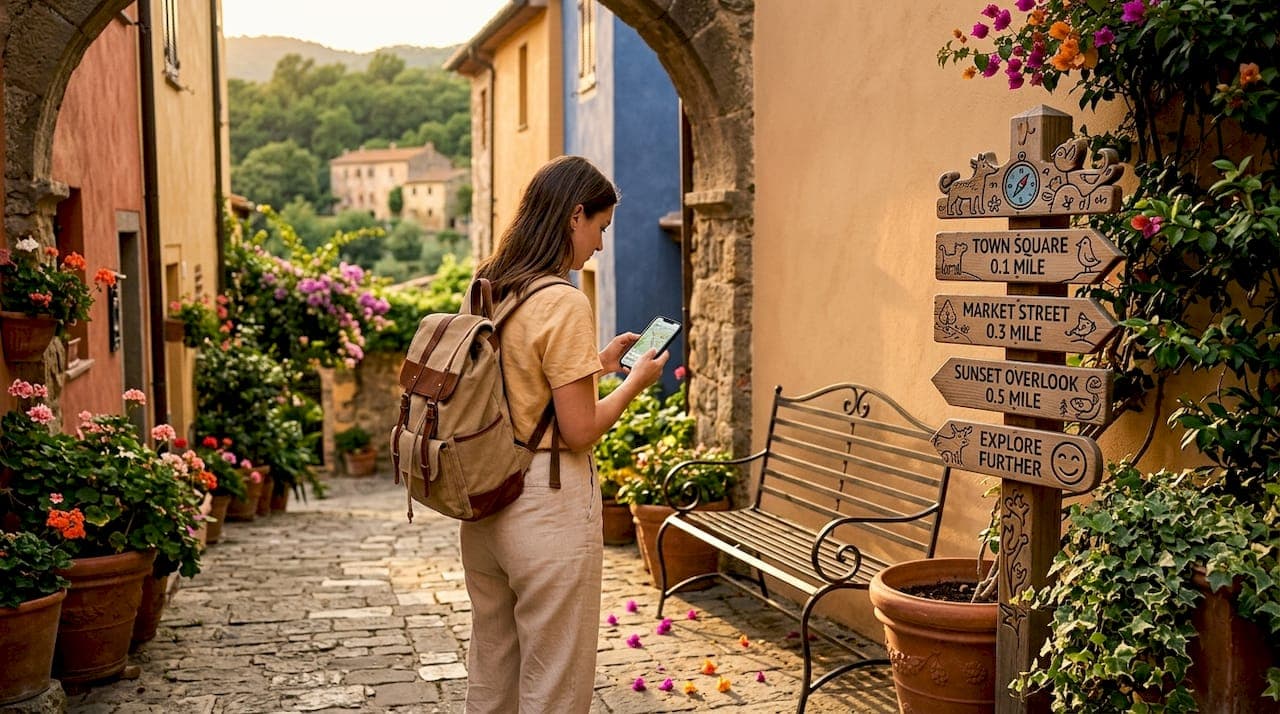
Everyone assumes the most famous spots deliver the best trips. Paris, Bali, Santorini. The logic seems obvious: if millions of people go there, it must be worth it. But that logic is exactly backwards. Why lesser-known destinations are better comes down to something you can feel the moment you arrive somewhere uncrowded, unfiltered, and genuinely alive with local culture. You get more for less money, more space, more authenticity, and memories that actually belong to you. This article breaks down every major advantage, backed by research, so you can start traveling smarter.
Table of Contents
- Key Takeaways
- Why lesser-known destinations are better for authentic experiences
- Crowds ruin more than your photos
- The real budget advantage of offbeat travel
- How technology helps you find hidden gem destinations
- Real places that prove the point
- My take on why offbeat travel wins every time
- Discover hidden gems with Itsyoworl
- FAQ
Key Takeaways
| Point | Details |
|---|---|
| Authenticity over performance | Lesser-known places preserve real culture, food, and traditions untouched by mass tourism commercialization. |
| Crowds cost you more than money | Overtourism degrades both visitor experience and resident quality of life, as Santorini's data makes clear. |
| Your budget stretches further | Offbeat destinations offer locally owned, affordable experiences that keep more money in the community. |
| Technology helps you find hidden gems | Smart recommender tools and curated itineraries make discovering lesser-known places easier than ever. |
| Real-world examples prove the point | Places like Lesachtal, Austria and Chokoloskee, Florida deliver unforgettable, uncommercialized experiences. |
Why lesser-known destinations are better for authentic experiences
The most honest travel experiences happen where no one is performing for tourists. When a destination gets overrun, local businesses adapt to visitor expectations rather than their own traditions. Menus get translated, simplified, and priced up. Street food stalls get replaced by souvenir shops. The culture you came to see becomes a curated version of itself.
Lesser-known places have not made that trade. Their food is cooked the way it has always been cooked. Their festivals are for the community, not the camera. When you eat at a family-run spot in a village that sees a hundred visitors a year instead of a hundred thousand, you are eating what locals actually eat.
Here is what authentic travel in offbeat destinations actually looks like:
- Real local food: No tourist menus, no inflated prices. You eat what the community eats, prepared the way it has always been prepared.
- Genuine cultural events: Local festivals, markets, and ceremonies exist for residents first. You witness something real, not a performance.
- Unscripted interactions: When locals are not fatigued by millions of visitors, they are curious, warm, and genuinely happy to share their world with you.
- Preserved traditions: Crafts, music, and customs survive in places where commercialization has not yet arrived to replace them.
Pro Tip: When you arrive in a lesser-known town, skip the first restaurant you see near any parking area. Walk ten minutes further into the neighborhood. That is where the real food is.
The economic dimension matters too. Tourism spending leakage is the portion of your travel money that leaves a destination through foreign-owned chains, imported goods, and corporate hotels. In offbeat destinations with locally owned businesses, your spending stays in the community and directly supports the people whose culture you came to experience.
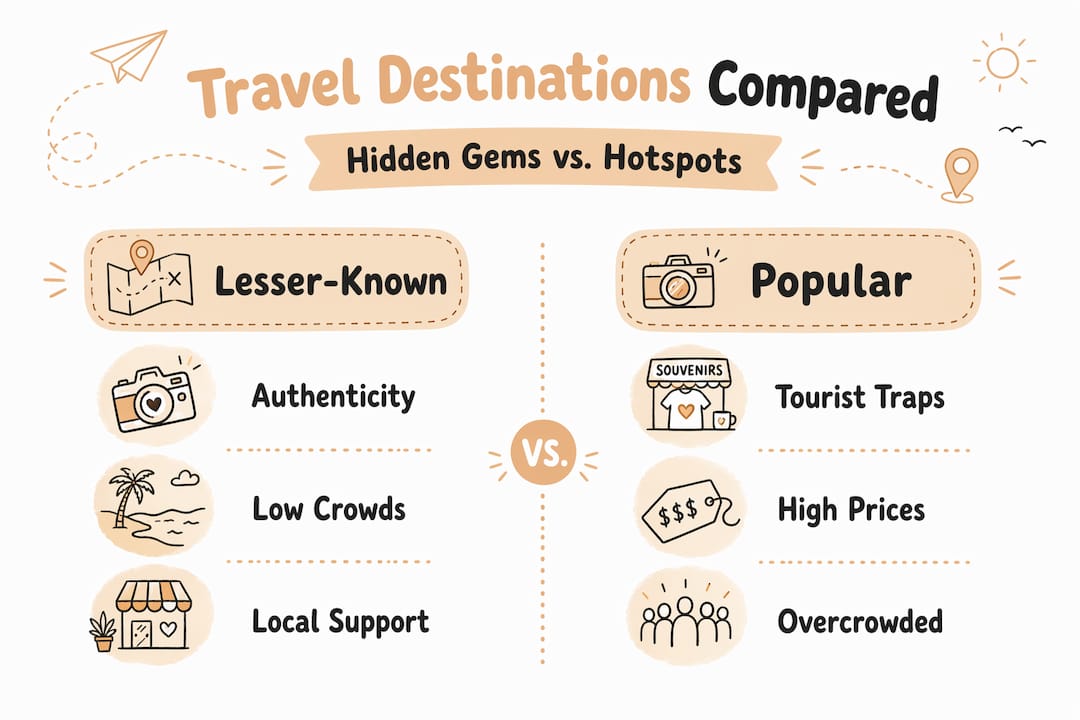
Crowds ruin more than your photos
Overtourism is not just an inconvenience. It is a structural problem that makes popular destinations actively worse for everyone involved, including you.
"87% of residents in Santorini report degraded daily life during peak seasons, and 79% favor abandoning mass tourism entirely for sustainable alternatives."
That is not a minor complaint. That is a community under siege. When residents are miserable, the warmth and hospitality that made a place worth visiting disappears. You end up navigating crowds, paying inflated prices, and interacting with locals who are exhausted by the relentless volume of visitors. The experience you paid for has already been consumed by the people who arrived before you.
Lesser-known destinations offer the opposite. You get space. You get quiet. You get public areas that function as they were designed to function, not as overflow zones for tour groups. The drawbacks of popular travel spots extend beyond crowding to include pressure on water supplies, waste systems, and housing costs that price locals out of their own neighborhoods.
Research on destination management confirms that reallocating tourism flows toward low-density, peripheral areas is one of the most practical strategies for improving travel quality across the board. The benefit is mutual. You get a better trip. The community gets a sustainable relationship with tourism. That is not a compromise. That is the smarter choice.
The real budget advantage of offbeat travel
Here is something the travel industry does not advertise loudly: popular destinations are expensive partly because of their popularity, not their quality. Demand drives prices. When ten million people want to stay in the same city during the same months, accommodation prices reflect that competition. You pay a premium for the privilege of being one of many.
Lesser-known destinations operate on different economics. Local guesthouses, family-run restaurants, and independent guides charge prices that reflect local costs of living, not global demand. Your dollar, euro, or pound goes significantly further.
Here is how to maximize your budget in offbeat destinations:
- Book locally owned accommodation. Skip the international chains. Guesthouses and family-run inns cost less and deliver more personal service.
- Eat where locals eat. Markets, neighborhood spots, and street food in less-visited areas are both cheaper and more authentic.
- Hire local guides. Independent local guides charge a fraction of what tour operators charge and offer knowledge no guidebook contains.
- Travel during shoulder seasons. Lesser-known destinations have even lower prices outside peak months, and the experience barely changes.
- Use smart booking tools. Platforms like Itsyoworl surface offbeat options with real pricing transparency so you are not guessing.
Pro Tip: Before booking any accommodation, search for locally owned options on regional tourism boards or local Facebook groups. You will often find places that do not appear on major booking platforms at all, and they are frequently half the price.
The WTO guidelines on sustainable tourism emphasize participatory planning that reduces reliance on externally owned businesses. When you choose local, you are not just saving money. You are ensuring the community actually benefits from your visit.
How technology helps you find hidden gem destinations
One of the most common objections to offbeat travel is practical: how do you find good options when they are not on the cover of every travel magazine? The answer is that technology has made this dramatically easier, and the tools keep getting smarter.
Research on travel recommender systems shows something fascinating. Decoy options in booking tools can steer travelers toward less congested destinations simply by presenting well-curated alternatives alongside popular choices. When travelers see an attractive lesser-known option framed as a genuine recommendation rather than a fallback, they choose it. The barrier is not desire. It is presentation.
Here is a comparison of planning approaches that illustrates the difference:
| Planning approach | Popular destination focus | Lesser-known destination focus |
|---|---|---|
| Accommodation cost | High, driven by demand | Low, reflecting local economy |
| Crowd levels | Peak season congestion | Manageable year-round |
| Cultural authenticity | Commercialized for tourists | Preserved and genuine |
| Environmental impact | High pressure on resources | Lower footprint |
| Traveler satisfaction | Often disappoints vs. expectations | Frequently exceeds expectations |
Beyond recommender systems, AI in travel planning is reshaping how people discover destinations entirely. Algorithms that factor in crowd data, local reviews, and seasonal patterns can surface places you would never find through a standard Google search.
Smart itinerary design also matters. Mobility investments that enable multi-destination trips make it easier to combine a well-known anchor city with several lesser-known stops nearby. You get the convenience of a recognizable base and the reward of exploring undiscovered locations just a short ride away.
Real places that prove the point
Theory is useful. Examples are better. These two destinations illustrate exactly what the advantages of lesser-known places look like in practice.
-
Lesachtal Valley, Austria: UNESCO recognized for cultural landscape preservation, this remote Alpine valley offers traditional farming communities, ancient pilgrimage routes, and landscapes that feel untouched by modernity. There are no ski resort crowds, no luxury hotel chains, and no performance of Austrian culture for outsiders. What you find is the real thing, quiet, generous, and genuinely beautiful.
-
Chokoloskee Island, Florida: Most people driving through the Everglades head for the main visitor centers. Chokoloskee sits at the edge of Ten Thousand Islands and offers kayaking through mangrove tunnels, local fishing culture that dates back generations, and an ecology that rewards slow, curious exploration. It is uncommercialized, affordable, and completely unlike anything you will find at a popular Florida beach resort.
Both places share the same qualities: preserved culture, low crowds, affordability, and experiences that feel personal rather than packaged. They also connect directly to the earlier points about authenticity and sustainability. When a destination has not been reshaped by mass tourism, it retains the qualities that made it worth visiting in the first place. That is what makes a destination truly special, not the number of Instagram posts tagged there.
My take on why offbeat travel wins every time
I have been in both worlds. I have stood in line for two hours to see something famous and felt nothing by the time I reached it. I have also arrived at a place no one in my circle had ever heard of and felt that rare, electric sense of discovery that reminds you why you travel at all.
The uncomfortable truth is that popular destinations often disappoint precisely because expectations are so inflated. You have seen the photos a thousand times before you arrive. The mystery is gone before you even board the plane.
Lesser-known destinations do not carry that weight. You arrive with curiosity instead of a checklist. Locals treat you as a guest rather than a transaction. The food surprises you. The landscape feels like yours for a moment. Those are the trips you actually remember five years later.
I also think there is a responsibility angle that does not get discussed enough. When residents favor abandoning mass tourism because it has made their lives worse, continuing to pile into those destinations is not neutral. Choosing offbeat places is a way of traveling that respects the communities you visit. That matters. And honestly, it makes the trip better too.
The practical challenge is real. Finding good options takes more effort than searching for the top-ten list. But the tools available now through platforms like road trip planning resources and smart booking systems make that effort much smaller than it used to be. The reward is completely disproportionate to the extra thirty minutes of research.
— E
Discover hidden gems with Itsyoworl
You now know why lesser-known destinations are better. The next step is actually finding them, planning smart, and saving real money while you do it.

Itsyoworl exists exactly for this moment. The platform curates offbeat destinations, surfaces authentic experiences, and gives you the travel hacks that popular booking sites will never share. Whether you want to cut accommodation costs in half or find a valley in Austria that feels like a secret, the resources are ready for you. Start with the 127 hidden travel hacks guide, which covers everything from booking strategies to finding locally owned stays that do not appear on mainstream platforms. For a faster read, the 7 hacks that save hundreds guide delivers the highest-impact tips in minutes. Why settle for a nut when you can have the world?
FAQ
Why are lesser-known destinations often cheaper?
Lesser-known destinations price accommodation and food based on local costs of living rather than global tourist demand. You pay what the market actually supports, not a premium driven by popularity.
How do I find hidden gem destinations?
Smart travel platforms and AI-powered recommender systems now surface well-curated offbeat options alongside popular choices. Decoy-effect research shows that travelers readily choose lesser-known sites when presented with attractive, well-framed alternatives.
Are lesser-known destinations safe to visit?
Safety varies by location just as it does with popular destinations. Researching local conditions, connecting with local guides, and using updated travel advisories gives you the same confidence you would have anywhere else.
What makes a destination special beyond its fame?
Preserved culture, genuine local interaction, and uncommercialized natural or historical features are what make a destination truly special. Fame often signals that those qualities have already been diluted by mass tourism.
How does visiting offbeat places support local communities?
Choosing locally owned services reduces tourism spending leakage and keeps your money circulating within the destination's economy. That directly supports the people whose culture and hospitality make the trip worth taking.